Corazón de Leche · cheese brand

Mexican cheeses, made in Spain.

Three classic Mexican cheeses elaborated in Spain by our brand Corazón de Leche, with Spanish pasteurised milk and the original Mexican techniques. Oaxaca melts and stretches (the "Mexican mozzarella"), Cotija crumbles and seasons (the "Mexican Parmesan"), Panela stays firm under heat. Available at El Corte Inglés and through HoReCa across Spain.

The three cheeses

Each one solves a different cooking problem. Oaxaca for melting and stretching. Cotija for crumbling on top. Panela for grilling and pan-frying without melting.

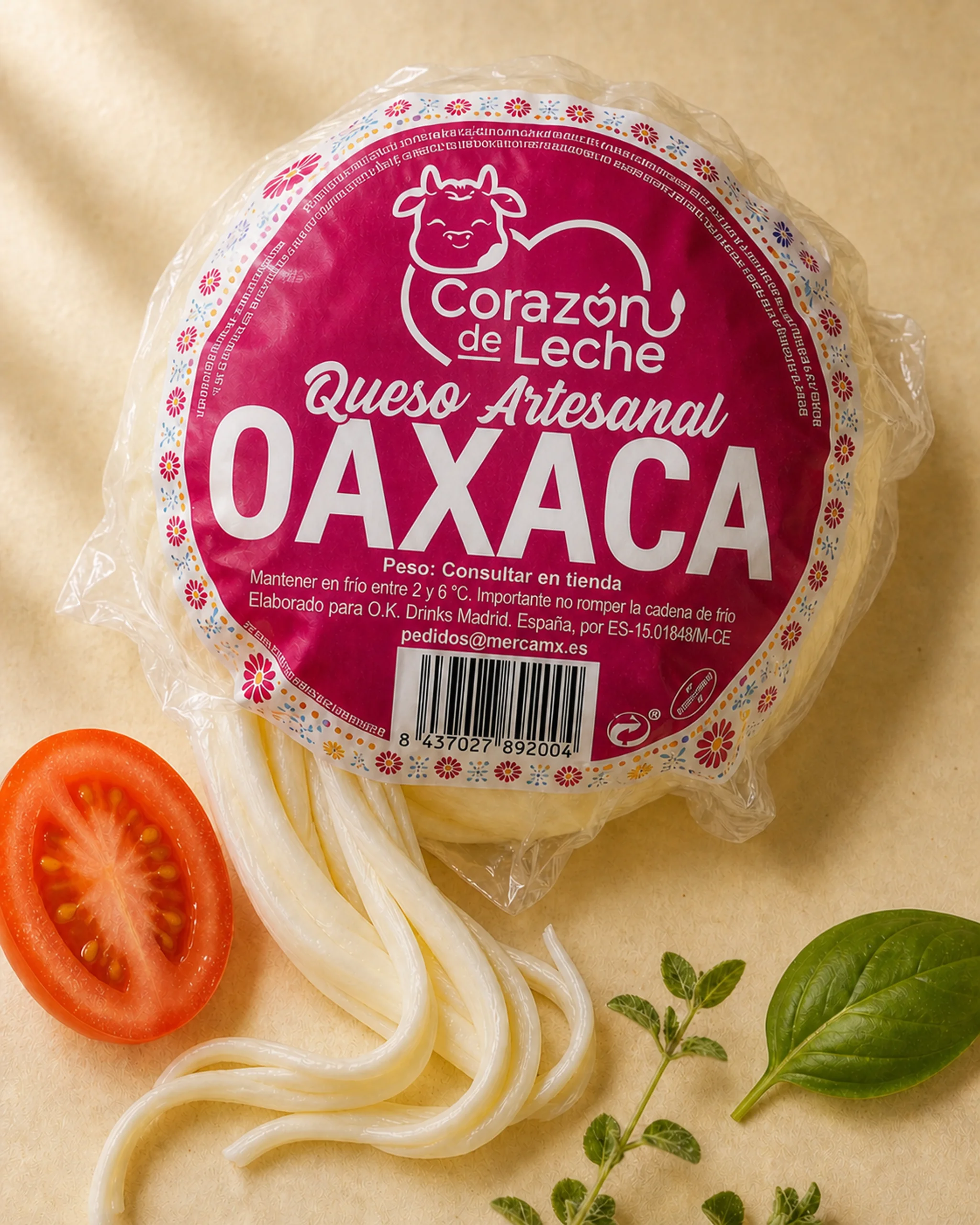
Oaxaca cheese — hand-rolled Mexican string cheese ball
Stretched-curd · 500 g ball

Oaxaca cheese

Hand-rolled string cheese — the Mexican "pasta filata" tradition, similar in family to mozzarella but with its own techniques. Pull apart into long elastic threads, melt for quesadillas or tlayudas, stretch on a grilled cheese.

  • Best for: quesadillas, tlayudas, grilled cheese, queso fundido
  • 500 g pasteurised cow's milk ball — keeps refrigerated for weeks
  • Made in Madrid by a Mexican cheesemaker following the Oaxacan stretched-curd method
Read full Oaxaca cheese guide →
Cotija cheese — aged Mexican cheese, crumbly
Aged · 250 g wedge

Cotija cheese

The "Mexican Parmesan" — aged, salty and crumbly, with deep umami flavour. You don't melt Cotija; you crumble it on top to finish a dish. The signature topping for elotes (Mexican corn) and esquites.

  • Best for: elotes, esquites, beans, tacos, salads
  • 250 g aged wedge — pungent, salty, deeply savoury
  • Closest European cousin: aged Parmigiano or feta — but with its own character
Ask about Cotija →
Panela cheese — fresh Mexican cheese, mild and firm
Fresh · 250 g wedge

Panela cheese

Fresh, mild and firm — the cheese that doesn't melt. You can grill it, pan-fry it, eat it raw with chili and lime. Cousin to halloumi or paneer, but lighter and less salty. The everyday Mexican table cheese.

  • Best for: grilling, frying, salads, breakfast (huevos rancheros)
  • 250 g wedge — mild, milky, low salt
  • Closest European cousin: halloumi or paneer, slightly softer
Ask about Panela →

How they compare

Quick reference to pick the right cheese. None of them substitute the others — they're built for different jobs in Mexican cooking.

CheeseTextureBehaviour with heatUse it forEuropean cousin
OaxacaStretched-curd, stringMelts and stretchesQuesadillas, tlayudas, queso fundidoLow-moisture mozzarella
CotijaAged, crumblyHolds shape (doesn't really melt)Topping elotes, esquites, beans, saladsParmigiano, feta
PanelaFresh, firmDoesn't melt — grills and friesGrilled, fried, sliced raw, saladsHalloumi, paneer
— Available also at

Find Corazón de Leche Oaxaca cheese at the gourmet cheese counter of El Corte Inglés in Madrid, Barcelona, Valencia, Málaga and Bilbao. Cotija and Panela available through our HoReCa channel — ask your local restaurant or message us directly.

Category primer

What Mexican cheeses are, exactly.

Mexican cheesemaking has three anchor categories, each solving a different job in Mexican cooking: Oaxaca (stretched-curd, melts in strings — the cheese for quesadillas), Cotija (aged and salty — the topping cheese), and Panela (fresh and firm — the one that doesn't melt, so it grills and fries). No European cheese is a 1:1 substitute — mozzarella comes close to Oaxaca in technique but not in salinity, feta approaches Cotija but is far more humid, halloumi mimics Panela but is saltier and rubbier.

EU regulation 853/2004 restricts imports of fresh raw-milk cheeses from third countries like Mexico. So the only legal way to have real fresh Mexican cheese in Spain is to make it locally. That's exactly what Corazón de Leche does — Mexican recipe + Spanish pasteurised milk + EU compliance. For hospitality with Mexican menu items, this means stable supply, real freshness (not months in shipping containers), and clean paperwork with sanitary inspection.

The three cheeses are frequently ordered together — a Mexican taquería in Madrid or Barcelona typically buys Oaxaca as its main volume driver (quesadillas, tlayudas, pizza MX) plus Cotija and Panela at 20-30% of that volume as topping and grilling references. Corazón de Leche Queso Oaxaca is currently at TasteAtlas' 5th best cheese in the world (2023) — the only Mexican cheese in their top 50.
FAQ

Mexican cheeses in Spain · what we get asked

Which Mexican cheeses are available in Spain?
Under Corazón de Leche, MercaMX distributes the three essential Mexican cheeses made in Spain with local pasteurised milk: Oaxaca (for quesadillas), Cotija (for topping) and Panela (for grilling/frying).
Why are they made in Spain and not imported from Mexico?
EU Regulation 853/2004 restricts imports of fresh cheeses made with raw milk from third countries. Local production with pasteurised Spanish milk is the only legal way to have real fresh product in Spain. The recipe is Mexican; the milk is local.
Where can restaurants buy Mexican cheeses at wholesale?
MercaMX distributes to hospitality, retail and catering across Spain — 24-72h cold-chain delivery. B2B formats (bulk shredded, grated, wedge). Also 17 El Corte Inglés stores. WhatsApp +34 628 68 60 89 or leonel@mercamx.es.
What is the best cheese for authentic Mexican quesadillas?
Oaxaca cheese — it melts and stretches in long strings and brings the characteristic salty-lactic flavour. Mozzarella is not a real equivalent (lower salinity, different melt behaviour).
How are Corazón de Leche cheeses stored?
All refrigerated at 0-4 °C. Fresh (Oaxaca and Panela): 30 days from packaging in sealed pack. Aged Cotija: up to 6 months. Once opened, consume in 7-10 days.

Want a quote for your restaurant or shop?

Restaurants, taquerías, retailers and events — all of Spain. Direct WhatsApp, English-speaking team, quote in hours.

Get a quote on WhatsApp